
⏱️ 16 min. estimated read time
Did a friend forward you this email?
Well, thank her and Sign up here so you get them all!
A NOTE FROM DOROTHY @ PLENTIFUL
Good morning everyone,
So, no, we are not talking about SpaceX or Anthropic’s latest nightmare. I am not considering SpaceX because I do not want to invest in anything that has to do with Elon Musk. Plenty other fish in the water. #POV
But I have some news.
I quit my job this gig this week.🚪S No long runway planned. No big cushion of six months of expenses lined up this time being in the middle of building Plentiful. Just the thing I should have done a while ago, done because it just felt wrong to keep doing otherwise. My gut knew it, it took me a little longer to listen.
I want to talk about this, because it is actually a money story. Here is what happened. I was doing good work. I knew it. The people around me knew it. And I kept doing it without enough return - not just financially, but in recognition, in trajectory, in being seriously considered. Too many crosses left unpaid. Too much energy given to a place that was not giving it back. And I know my worth today. And there is nothing more powerful for your self-esteem to stand up for yourself in life. To say no what or who does not serve you. Self-worth is not built by reading a book on the topic but by acting like it: little nuggets of action that build up your self-esteem bucket.
Also a few years ago, I went to a workshop about quitting based on the book by Annie Duke, Quit. The core idea is this: quitting is a skill, not a failure. We are culturally wired to see it as weakness, to frame "sticking it out" as the brave choice. But Duke argues that the bravest and hardest thing is often knowing when to leave - when the evidence tells you this is not the right path anymore, even if you cannot see clearly what comes next.
What struck me was the link between that decision and self-knowledge. You do not leave a situation that is underselling you without first believing, really believing, that you are being undersold. The decision requires the belief. The belief comes first.
I am not here to sell you "quit your job" as some kind of life advice - not at all. I am not reckless. I am a little scared and anxious. But I am not . At the root of it is something closer to the question this issue keeps circling back to: what do I think I am worth?
Which brings me to this week's Money on My Mind.
Money on my mind: What are we really buying?
Market Pulse: A redesigned weekly snapshot of the S&P 500, AEX, Gold, Bitcoin (yep, we like to experiment and see what works)
In Analysis: Heard of the EU salary transparency directive? Because it’s for YOU.
What we're reading: Two links worth your coffee break
Ask us a question and we will reply.
Share the love 💗 and forward this to the strong women in your life.
Have a great Summer solstice.
~ D. 🍭

WELCOME TO PLENTIFUL 👋👋🏽👋🏿
If this is your first issue - hello, and welcome!
Plentiful is a personal finance newsletter for women who want more out of their money and lives: equal parts honest, analytical, and fun. Each week you get real money content written like your sharpest girlfriend explained it, with the occasional tangent into culture, psychology, and the state of the world. Hit reply and say hello - we actually look forward to receiving them. And if someone forwarded you this, consider subscribing. It is free, and it will not disappoint. Else, you will be eligible for a feedback coffee date.☕
MONEY ON MY MIND
What Are We Really Buying? (est. 5 min read)
Self-worth - the kind that lets you walk out of a room you no longer belong in - and status anxiety - the kind that sends you back in to buy the thing someone else has - are the same question from opposite directions. One asks: what do I think I am worth? The other asks: what do I think others think I am worth?
Both drive enormous financial decisions. Neither gets talked about enough.
If you read Laura's last two newsletters, you know she's been labelled "cheap" and slowly adopted it as a superpower. Her ability not to cave to outside pressure about where you should live, what your place should look like, how you should dress is something I admire.
Yet, I am vastly different from Laura.
I like spending money. I am a spender, a buyer. I like to buy nice things, nice gifts for my family, I like to be generous when I can - which is not always the case, but I try. I have an eye for quality, and honestly, since I was a child, I have always known how to find the most expensive piece of anything in a store. An object, a piece of clothing, whatever it is, I find it. I once considered becoming a personal shopper after a few friends kept hinting at it.
I also have my limits, and weirdly, that is a beautiful thing too. There is something funny that happens in me when I see a bag for five thousand, forty thousand, whatever the number is - it almost stops registering. It feels entirely unnecessary, so it becomes entirely useless to me. Even as my finances have grown, and yes, the price tag on certain things I buy has gone up with them, I am still the biggest sale-hunter in the world. If I can get something at a big discount, I am more than happy to do it. That part of me has not changed. And wealthy individuals are the ones who also bargain the most. I used to work in a really high-end store in Paris. I remember so vividly what some clients would ask and would think about how my mom would never dare asking such things, being way too polite to even complain about stuff she should have complained about.
So unlike Laura, I have always been stamped as a spender. And I have been one. I have definitely spent more money than I should have on things I really did not have room for in my finances. I love shopping, I love beautiful things, and I think part of that is exactly what this section is about. I have known myself to push a little beyond the edge of what my finances could actually support - just to get what I wanted. That is not something I am super proud of. But it is still there, and I would rather be honest about it than pretend it is not.
Here is what has shifted though. I used to be praised for my sense of style. My passion for it, my very unique way of putting things together. And I believe the shift I have gone through is directly linked to my evolving relationship with money, and with figuring out what I actually value - and where value really lies for me. I still love fashion, genuinely, it is my thing. But today I am far more interested in being recognized for what I am doing professionally. Which means, practically speaking, I dress pretty casually now. Pretty unoriginally, if I am honest. I just do not spend much time on it anymore, because my attention has gone somewhere else.
Maybe that is partly age. But I think it is really a journey through figuring out where I put value, and how much status I am actually looking for. Because I am still looking for status, in a way. Just not in that way anymore.
This is exactly what Morgan Housel gets at in The Art of Spending Money. We love to point to unique individuals in the world of finance and success - people who feel so different from us, so unattainable, and yet we secretly want to be like them. Warren Buffett is the obvious example - in investing (not for fashion obviously lol). And it is worth remembering that Buffett is famously low-key. He still lives in the same house in Omaha. He did not move to some glittering enclave next to a Kardashian. He is known for getting his breakfast at McDonald's most mornings - something he could upgraded for mere health reasons if you ask me. He also spoke about driving the same car forever.
This matters, because so much of what we buy - the stuff that quietly inflates our cost of living - does not actually work in our favor. It does not help us put money aside that could grow over time. We buy things because they signal status and earn us respect, telling ourselves that is what matters. But does it, really? In my experience, people often have more respect for someone who can resist the pull to do what everyone else is doing. It is hard. It is genuinely hard. But once you start saying, honestly, I do not care, and you do your own thing instead - there is real power in that. What do I buy to gain status, acceptance, or respect from other people?
There is a fun, slightly unexpected layer to this too. I will admit I am no Kardashian expert, but their latest show became a bit of a binge-watch for me while doing chores at home (Khloé is my favorite, for the record). And there is a moment where you see Kim Kardashian studying - law, in her case, obviously in a version of studying that looks nothing like ours, none of us have a twelve-meter-long desk. But what struck me is what she is actually chasing. She does not want to be recognized for being a celebrity. She does not want respect for her TV show, or for driving an expensive car, or living in a house that cost a fortune. She wants to be respected for having a profession, a role in society that is seen as legitimate. I think that says a lot, actually - more than we usually give celebrities credit for.
And here is the layer underneath all of it, for me. When I think about the people I value most, the people I love the most - it has nothing to do with money. Money might be a consequence of their abilities. But what I actually admire is their courage. Their brains. Their kindness. I think that is true for most of us, if we are honest. And yet we still get pulled into this current of status anxiety, almost against our will.
There is a way out of it. And it starts with knowing yourself. Getting closer to what you actually stand for, what you actually value, so that the pull matters less. Which is really more psychology than anything else. But that is exactly the point of Housel's work too: personal finance is a far more personal thing than it is a hard science.
The quit decision? Same logic. Knowing what I am worth made the decision possible. Whether that translates into the right next financial chapter, I do not know yet. But I trust the part that knows. And it feels really powerful to tell someone who does not deserve you, I quit.
INVESTING
Market Pulse
Here is your weekly market pulse. Tracking a few markets stats regularly builds confidence and context over time. Think of this as your weekly snapshot of how the investing world is doing.
💭 To our older subscribers, this might look a bit different. Do you like it better or worse? Reply to this email and please let us know! That’s the only way we know what our community wants to hear about.

✨ This week:
Three things moved the markets this week. First, the US jobs report came in really strong - which sounds like good news, and it is for people with jobs, but it actually pushed gold down. Here is why: when the economy looks healthy, people feel less need to park their money somewhere "safe" like gold, so they sell it. Second, geopolitical tension - specifically what is happening in Iran - made stock markets nervous last week, though things have calmed slightly since. For how long? Who knows. Markets hate uncertainty, and wars or conflicts create a lot of it. Third, Bitcoin had a rough few weeks (or months really) and is still recovering. It is the most sensitive of the four. Crypto is not for the faint hearted so when people feel cautious with money, it can logically be the first thing they step back from.
Why these are important — S&P 500: Tracks 500 largest U.S. companies; broad view of U.S. and global economy; AEX Index: Tracks top Dutch companies; reflects European performance; Gold: Considered a safe-haven asset; often rises during uncertainty; Bitcoin: One of most popular cryptocurrencies; shows an alternative investment (Prices from Yahoo Finance and goldprice.org, prices as of June 12, 2026)
IN ANALYSIS
Heard of the EU salary transparency directive? Because it’s for YOU. (est. 6 min read)
Quick note before we start: nothing in this section is legal or financial advice. I am not a lawyer. This is me explaining a piece of legislation that I think every woman with a salary in Europe should understand.
Something happened recently that needs to be noticed.
On June 7, 2026, the EU Pay Transparency Directive came into force. Every EU member state was legally required to have it transposed into national law by that date. That means: written into their books, enforced, operational. And?
… almost none of them did it.
As of the deadline, only four countries had actually implemented the directive: Italy, Slovakia, Lithuania, and Malta. The Netherlands - where many of us here live and work - announced last September that it was not feasible to meet the June 2026 deadline and postponed until January 2027. Estonia went a step further and basically said it would rather pay a fine to the EU than increase the regulatory burden on national businesses.
I have a long support of salary transparency for the reason the somewhat obvious reasons that women are losing AND that I was directly confronted with the subject after having an open chat with a male colleague who ended up being VERY surprised about the gap between his and my pay for doing the same jobs.
The directive was adopted in April 2023. Member states had three years to implement it. Most of them are late. Some are stalling. And employer lobbying groups like BusinessEurope have been actively campaigning to water it down - their coalition published something called an "Omnibook" of deregulation, and pay transparency is listed as the very first item they want to roll back.
I find that extraordinary. And worth understanding.
What the directive actually says.
The EU Pay Transparency Directive (Directive 2023/970 for the technically-minded) does several things. It requires employers to include salary ranges in job advertisements, or at the very latest to communicate them during the job interview. No more of the "competitive salary" black hole that so many of us have negotiated blind from. Candidates must have a real number before they sit down across from anyone.
It also gives every current employee the legal right to request - in writing - information about their own pay level and the average pay of colleagues doing equivalent work, broken down by gender. Employers must respond within two months. Ladies, this is big!
Then there is the reporting piece. Companies with 150 or more employees must start reporting on their gender pay gap using 2026 data, with the first reports due in 2027. If a gap of 5% or more is identified between men and women in comparable roles - and the employer cannot justify it on objective, gender-neutral grounds - they are legally required to take corrective action. If the gap is not resolved within six months of being identified, a full joint pay assessment with employee representatives is mandatory.
The penalties for non-compliance will be determined by each member state, but fines are a required minimum. Some countries may go harder. Obviously, there will be plenty of creative workarounds coming up I’m sure…

A little break to tell all about our upcoming Summer editorial. Welcome to Plentiful on the beach. Your weekly dose of breezy money. We thought Summer deserved something light, fun, and aspirational. So, we imagined a hybrid: Vogue meets finance. Coming this July in your inbox.
Why it matters. As a gentle reminder.
The EU gender pay gap currently sits at 11%. Women earn on average 11 cents less per euro than men for equivalent work. That is the Eurostat figure for 2024, down from 16.2% in 2011. Progress, yes. But slow. Fifteen years of progress and a gap that still adds up to tens of thousands of euros over a career. And this number widens when we consider women of colour.
The European Trade Union Confederation calculated that without strong intervention, the gap will not close until 2104. As doubtful as I can about this kind of futuristic prognostic, I am bound to sigh and wonder why it has to be so hard.
What this means for you, practically.
If you are job-hunting anywhere in the EU: this directive gives you the legal right to a salary range before you negotiate. It is not optional for the employer, and it is not rude for you to ask. Ask. You are entitled to it.
If you are currently employed: once this is implemented in your country, you can request - in writing - the average pay of people doing equivalent work to yours, broken down by gender. This is information you have been legally entitled to, and now have a formal route to access. Use it.
If the gap at your employer exceeds 5% and cannot be objectively justified, your employer is required by law to address it. That is not a nice-to-have. That is now law.
Don’t worry, I know it’s tough to go there with an employer because you want to be the model employee who works well and does not make waves. But, sometimes, we need to stand for ourselves. Also, initiatives can be led by internal groups. This is a lot more powerful and a lot less exposing.
What to watch.
This is the introduction moment. We will be coming back to this directive later in the year, once more member states have implemented it and the first real-world pay gap reports start appearing. The questions worth tracking: which countries lead, which ones lag, whether the lobbying to dilute the directive gains traction, and whether the numbers start moving in a meaningful way once transparency kicks in. Or whether nothing happens. The future will tell.
Have you received any information about this from their employer? We are curious to know if any company has communicated on this.

WHAT WE’VE BEEN READING
We’ve done the work so you don’t have to.
Two very distinct shares.
Positive psychology Harvard course by Tal Ben Sahar
Have you ever thought of what does it look like to attend a Harvard university class? Well, here you are. The course taught by Tal Ben Sahar was the most successful class of the university while it was running, now quite a few years ago. I will never know how I ended up there. The video quality is atrocious against 2026 standards but the content is gold. If you want to learn more about happiness, stress, perfectionism, self-esteem and a lot more, this is IT. I am not sure how to describe how great this content is. So, grab a notebook and pace yourself. I learnt a lot from this course.
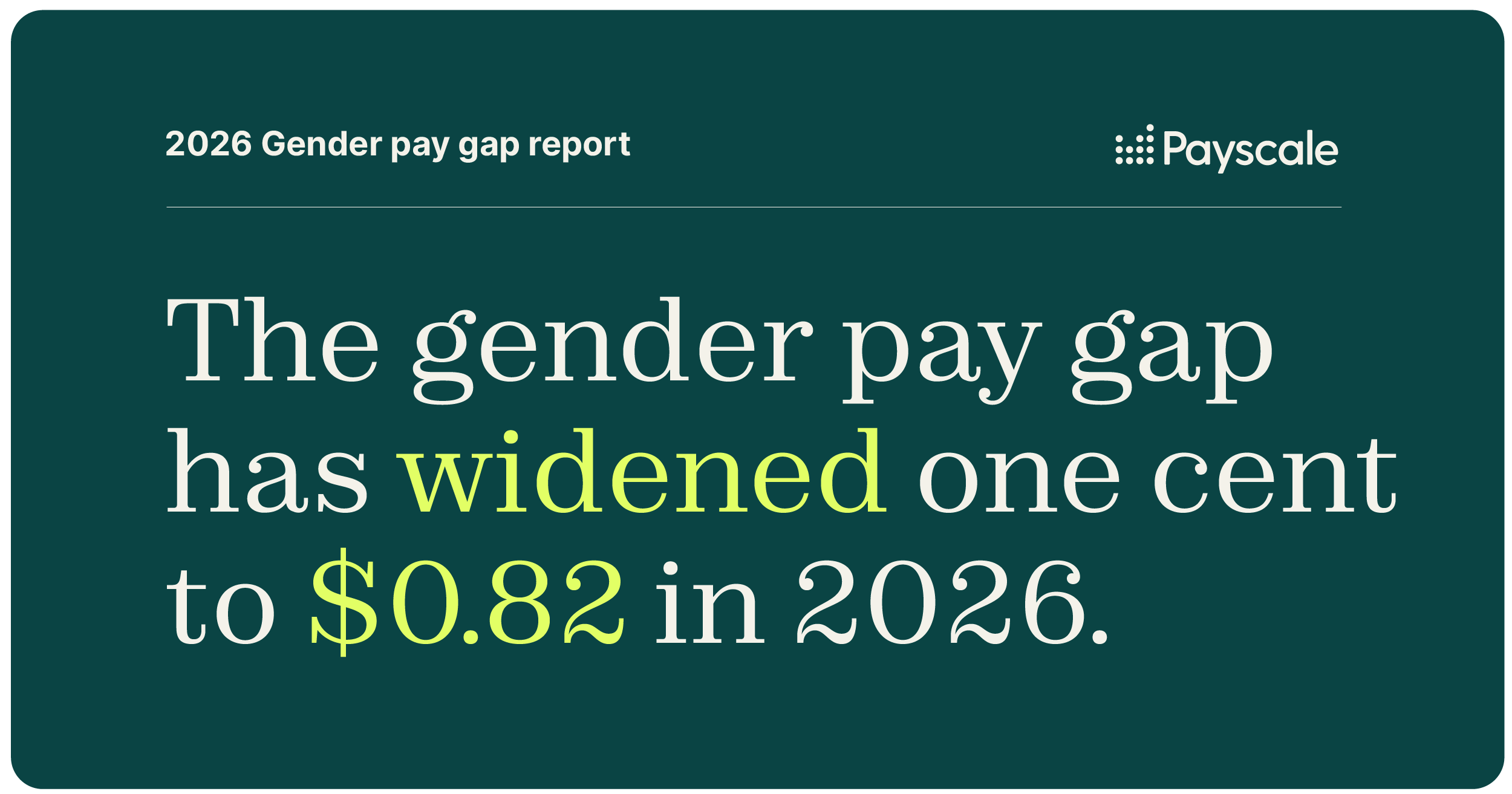
For the data lovers, here you are. Payscale has released a research on the gender pay gap with some really great nuggets of data, taking into account, age, race, industry etc…
The takeaway: Well, it’s simply. The gender pay gap is everywhere, in every industry and at any age really. It fluctuates but it is robust. Data is only a piece of the puzzle. It does not move the needle in and by itself but it’s a very necessary piece to have in your pocket.
A QUOTE TO END
Wealth is not an absolute. It is relative to desire. Every time we yearn for something we cannot afford, we grow poorer, whatever our resources."
- Alain de Botton, Status Anxiety, 2004
↪️ This guy is the cool kind of philosopher and thinker because he makes it fun and approachable. Any of his books deserve a read. As I have been thinking about how we approach the subject of wealth building in consideration of our recent writings, I thought this quote was quite fitting.
If this helped you, forward it to one person also looking to build their future.
See you next week,
D & L

